

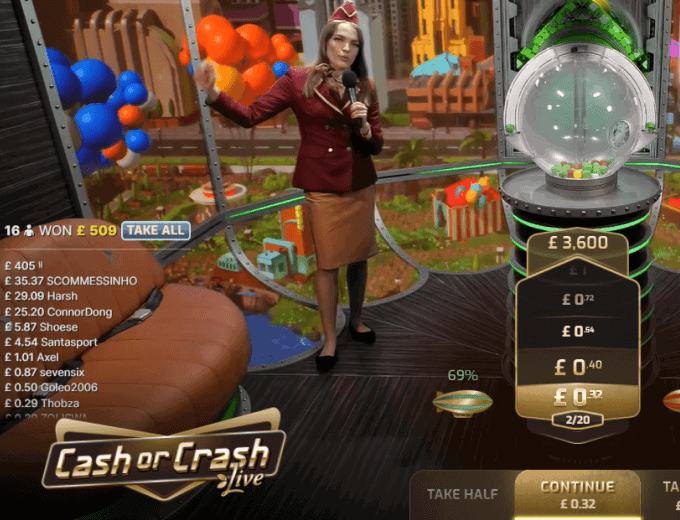
Covering entertainment and digital trends as a journalist, I’ve watched a curious shift in how Canadians view risk and reward https://cashorcrash.ca/. We used to picture high-stakes drama on trading floors or at casino tables. Now, that same feeling has an unexpected echo in the way people see legal proceedings. Courtrooms, with their built-in tension and clear-cut verdicts, connect with a similar part of our collective imagination. This brings us to a platform like Cash or Crash Live. It doesn’t participate in legal matters. Instead, it acts as a cultural mirror, mirroring a broad curiosity about moments of intense pressure. Outcomes in a real Canadian courtroom decide matters of justice, with profound and lasting impact. Cash or Crash Live takes the basic thrill of an « all-or-nothing » moment and delivers it into a controlled, entertaining format. We must keep this distinction sharp: the live legal system operates with solemn duty, not for amusement. Still, acknowledging our shared fascination with pivotal moments helps explain why games that simulate edge-of-your-seat tension hold such appeal. They present a version where everything can be won or lost in an instant, without real-world fallout.
Understanding the Canadian Legal Landscape
To understand where any similarities with games of chance fall apart, you must have a understanding on Canada’s legal underpinnings. The system is a meticulously built establishment. It rests on the rule of law, legal authority, and strict protocol. Its objective is to deliver justice, never spectacle. Provincial courts handle everyday cases, while the Supreme Court of Canada addresses constitutional questions. Every step adheres to statutes like the Criminal Code or provincial acts. The process is measured and slow. Pleadings get presented. Evidence is produced under strict regulations. Arguments must depend on law and fact. A trial isn’t a impromptu event; it’s the final step of this detailed planning. The outcomes—guilty or not guilty, liable or not liable—alter lives for the people concerned. Judges or juries arrive at these verdicts through careful deliberation. They carry a heavy duty. The outcome is never settled by a spinning wheel or a crashing market. This ethical, careful atmosphere couldn’t be more different from the quick, chance-based excitement of a live game show. The distinction underscores the critical disparity between societal justice for justice and a personal option for amusement.
The Allure of High-Risk Moments
What draws people, Canadians included, to high-stakes situations? The psychology is simple. These scenarios activate a potent cocktail of adrenaline and dopamine, chemicals associated to alertness and reward. You observe this attraction in suspenseful films, competitive sports, and games that simulate risk. A courtroom verdict or a critical piece of evidence shares a story shape with these moments. There’s a rise of tension, a decisive instant of disclosure, and a final conclusion. Platforms like Cash or Crash Live plug directly into this mechanism. They compress the narrative into a fast-paced, pictorial format. The core « cash or crash » mechanic poses a widespread human dilemma. Do you cash your winnings or risk them for more? It’s a streamlined, risk-free version of life’s larger gambles, like investing savings or hoping for a jury. For players, it creates a secure space to feel the thrill of decision-making under pressure. The stakes are individual points or tokens, not someone’s liberty or livelihood.
Legal Proceedings Are Not a Contest
We need to eliminate any notion that legal proceedings resemble games of chance. The Canadian justice system is built on fairness, evidence, and reasoned argument. A verdict is not a random event. In an ideal world, it’s the logical conclusion drawn from applying the law to proven facts. Lawyers don’t « gamble » on strategies blindly. They construct arguments from research, precedent, and testimony. Judges and juries are not passive spectators hoping for luck. They are diligent, duty-bound arbiters who must deliberate with care. The timeline stretches over months and years, not seconds. Framing this as a « cash or crash » scenario misinterprets and undermines the pursuit of justice. The metaphor endangers reducing complex human stories and legal principles to mere spectacle. The public might follow a sensational trial with a game-like fascination. But the people inside the system are engaged in a deadly serious process. There is zero element of chance in its rulings.
Conscious Engagement with Chance-Based Entertainment
For Canadians who appreciate the rush of chance-based entertainment like live dealer games, responsible engagement isn’t just a piece of advice—it’s vital. Rule one is to see the activity as paid entertainment. It is not a means of income or a cure for financial difficulties. Set a firm budget, an amount you can manage to lose completely, and hold to it without justifications. Set time boundaries for your gaming periods. Avoid playing when you’re emotionally distressed. Choose to reliable, licensed platforms overseen by provincial authorities in Canada. These provide crucial protections like certified random number generators, along with tools for setting deposit limits or self-exclusion. Your mindset should match a leisure activity. The cost of participation should be like getting a ticket to a movie or a ball game. The moment it stops seeming like fun, the time it becomes like a compulsion or a financial requirement, it’s time to stop. Every Canadian territory offers responsible gambling resources. Utilize them.
Contrasting Virtual Risk with Actual Consequences
The central distinction here is clear. It hinges on the character of the stakes. In Cash or Crash Live, the risk is purely financial and voluntary. It’s limited to the entertainment budget a player opts to spend. The « crash » means forfeiting that wager. It entails no additional legal, social, or personal consequences. The environment is designed for excitement. A Canadian courtroom deals with consequences of a distinct magnitude altogether. The stakes are essential rights: freedom, financial security, child custody, reputation. The procedures aren’t meant for entertainment. They exist for truth-seeking and the fair application of law. A trial’s outcome can affect the course of lives, families, and entire communities. Both arenas contain tension and unpredictable outcomes. But linking them is a false equivalence. One is a leisure activity that mimics risk. The other is a pillar of democracy, handling real human conflict with deep and permanent effects.
The Place of Entertainment in Respecting Law
Even with the law’s seriousness, the public has always engaged with legal drama with an component of entertainment. Think of courtroom sketches on the nightly news, the seemingly infinite stream of true-crime documentaries, or riveting legal thrillers. Canadians are fascinated by narratives of justice. This insight doesn’t diminish the system. It underscores a human urge to understand conflict and resolution. Platforms providing interactive entertainment, like live game shows, operate in a separate sphere. Yet they fulfill a similar desire for engaging narrative tension in real time. They offer a structured, predictable form of excitement. The rules are clear and the outcomes are immediate, bounded by financial limits. This lets people engage with feelings of risk and anticipation in a safe, consensual, recreational context. It’s a form of play. It’s essentially different from the often grim and always serious business of law. Still, it taps into a similar cognitive hunger for resolved tension and clear outcomes.
Cash or Crash Live game: A Challenge of Tactics and Courage
Cash or Crash Live is a hosted game show built on this psychology of uncertainty. A genuine host streams the action in actual time. The idea is basic and gripping. A factor, linked to a digital rocket, begins climbing from 1x. Players make a stake before the round begins. As the value rises, they confront a single choice: cash out to guarantee their bet increased by the present value, or wait for greater returns. The catch is that the rocket can « fail » at any sudden instant. When it fails, the multiplier returns to 1x. Any player who stayed in loses their bet. No ability can foretell the failure. It’s a unpredictable happening driven by a certified algorithm. All the strategy depends in the choice of the withdrawal choice. This generates a palpable, communal tension. Audience members see the value soar, seeing which contestants collect their gains and which watch potential gains vanish. It’s a pure, concentrated taste of danger versus reward.
Conclusion: Different Domains, Common Human Captivation
The figurative line between a « courthouse break » and a game like Cash or Crash Live is sharp and should not be muddled. Canada’s legal system is a complex, essential institution for rule and justice. Its decisions are considered, not arbitrarily determined. Cash or Crash Live is interactive entertainment. It presents the universal thrill of risk and reward into a fast-paced, digital format. What they share isn’t process or outcome. It’s a deep-rooted human obsession with pivotal moments, with tension and its release. One fulfills our societal need for order and fairness. The other attends to a personal desire for thrills within a safe, recreational context. Recognizing this difference lets us value both the weight of the law and the designed fun of a game. Watching culture, I see them as two different reflections of how we, as a society and as individuals, navigate the ever-present notions of chance and decision.
